

ESL Gateways
What Are ESL Gateways
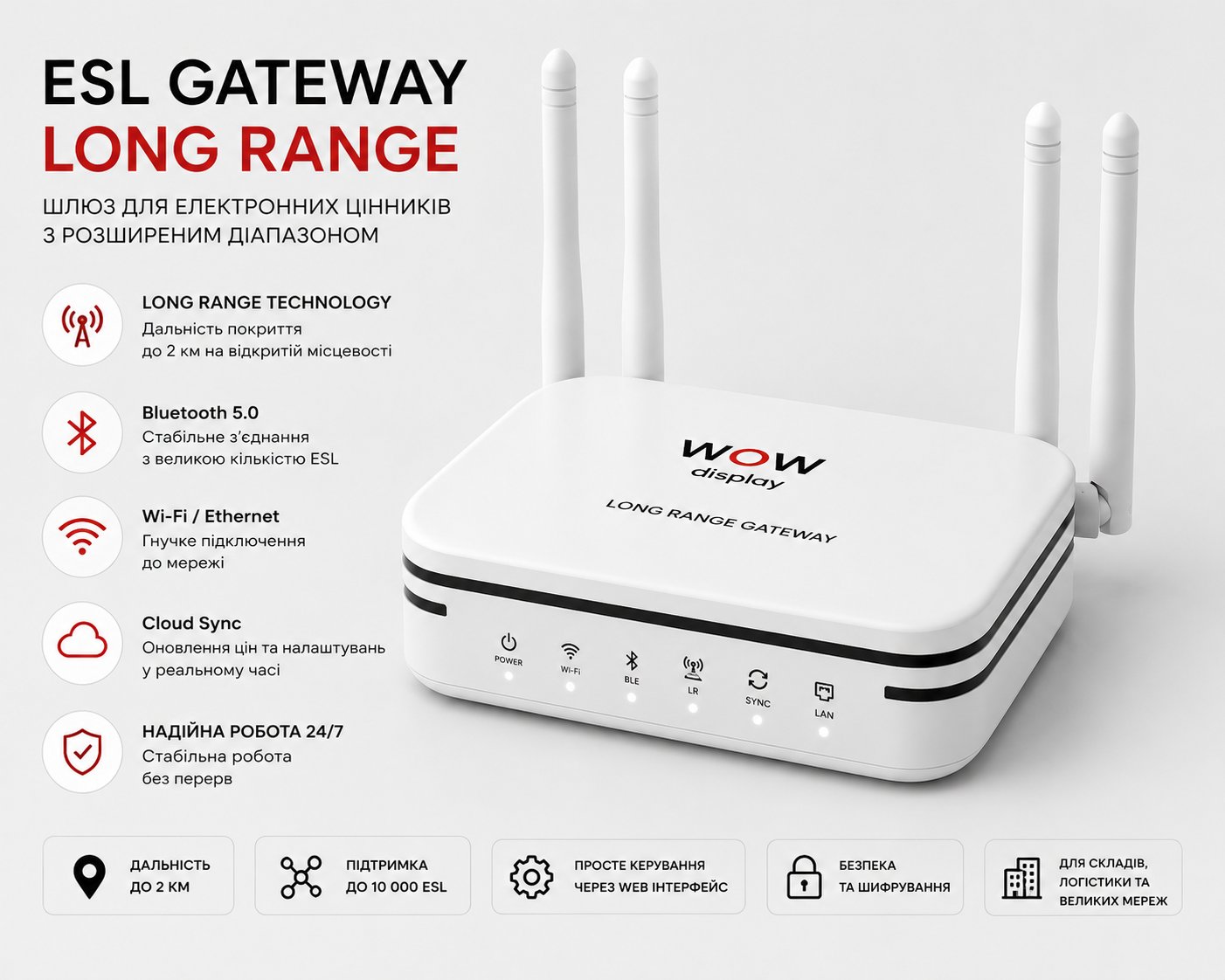
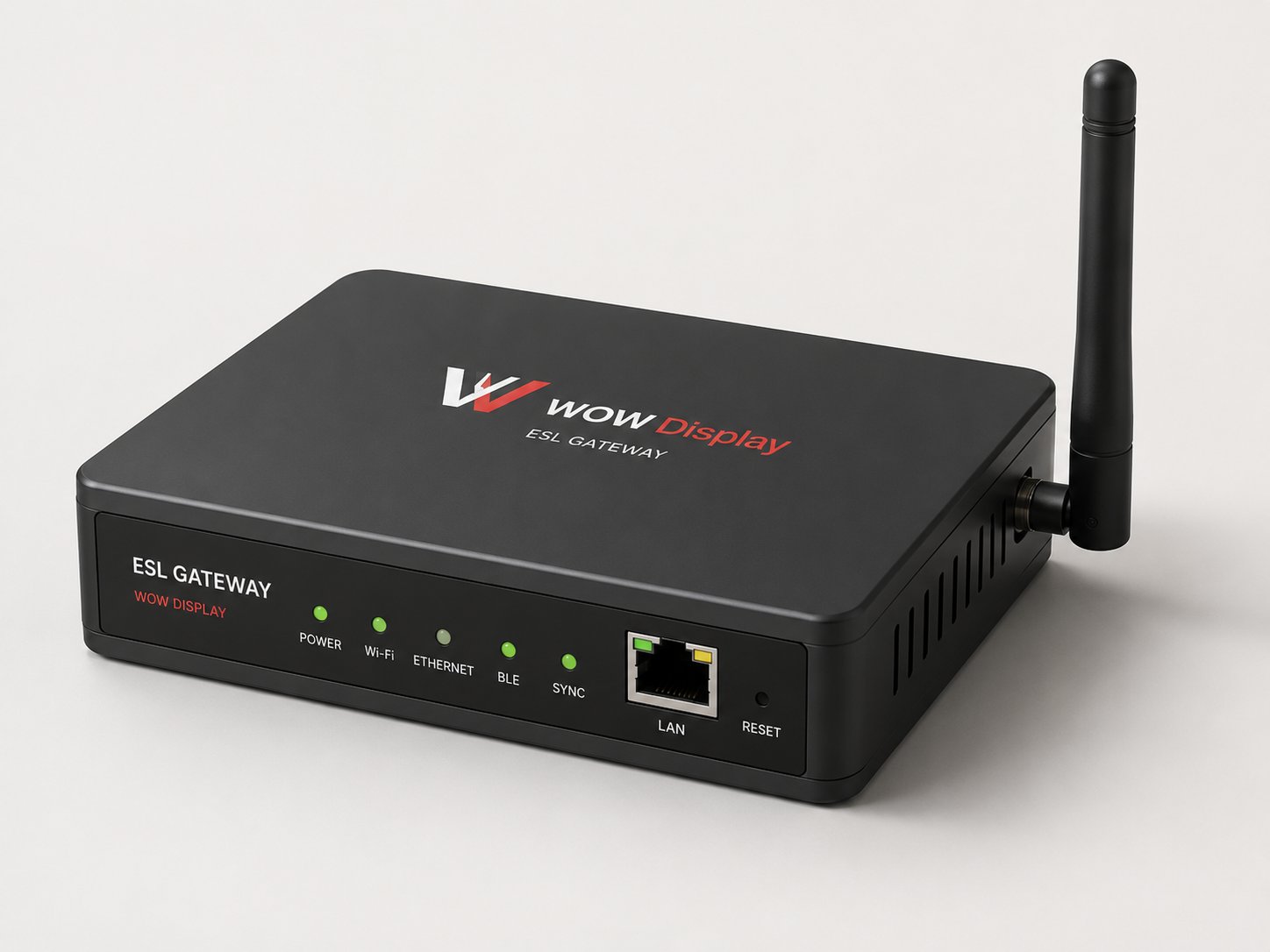
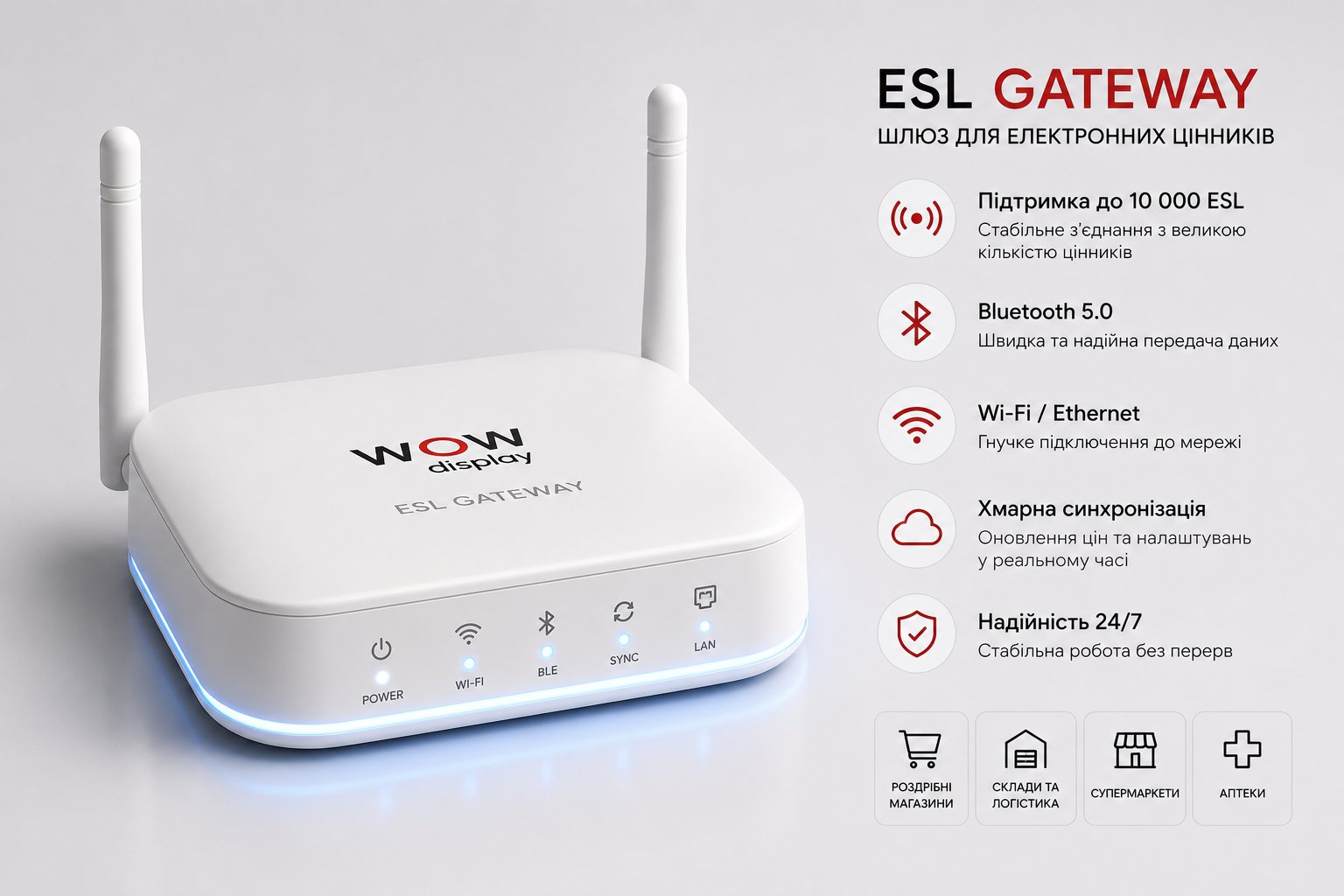
An ESL Gateway is a central communication device that provides a connection between the software and electronic shelf labels. The gateway is used to transmit commands for updating prices, promotions, QR codes, barcodes and other information displayed on E-Ink screens.
The gateway acts as a coordinator for the entire electronic shelf label network. It receives information from a server or cloud platform and transmits it to hundreds or even thousands of ESL devices simultaneously. This allows updates to be performed automatically without staff involvement.
Where ESL Gateways Are Used
- Supermarkets
- Grocery stores
- Pharmacies
- Home improvement hypermarkets
- Electronics stores
- Clothing stores
- Warehouses and logistics centers
- Hotels and restaurants
Main Advantages
Centralized Management
All electronic shelf labels can be updated through a single management center without having to work with each display separately.
Fast Data Transmission
Gateways are optimized for transmitting large amounts of information and can update hundreds of displays simultaneously.
System Scalability
If necessary, the network can be easily expanded by installing additional gateways without rebuilding the entire infrastructure.
Reliable Operation
The system maintains a stable connection with the labels even with a large number of devices and frequent information updates.
How to Choose an ESL Gateway
When choosing a gateway, it is important to consider the store area, number of electronic shelf labels, communication technology, wall materials, layout of the premises and future system expansion. One gateway is usually sufficient for small retail locations, while large supermarkets or warehouse complexes may use several devices to provide uniform coverage across the entire area.
| Location | Recommendation |
|---|---|
| Small store | 1 Bluetooth or Wi-Fi gateway |
| Supermarket | Several gateways with zone-based coverage |
| Warehouse | Industrial gateways with an extended range |
| Retail chain stores | Centralized management through Cloud Platform |
Technical Features
Modern gateways support Bluetooth Low Energy, Wi-Fi or other specialized communication protocols depending on the system architecture. Most models can operate 24/7, automatically synchronizing data with the server, supporting data encryption and monitoring the status of all connected electronic shelf labels.
The software allows users to monitor signal strength, the status of each label, update history and battery levels, as well as perform bulk operations with just one click.
Compatibility
- Bluetooth ESL electronic shelf labels
- Wi-Fi ESL systems
- Cloud ESL Platform
- ERP and POS systems
- API integration
- Windows Server
- Linux
- Android and mobile applications
Recommendations
When designing the system, it is recommended to provide sufficient coverage reserves and scalability from the beginning. This makes it possible to add new electronic shelf labels as the store expands or retail equipment changes without completely upgrading the network.
-
What is an ESL gateway used for?
An ESL gateway is a central element of an electronic shelf label system. It receives commands from the software and transmits them to electronic displays, ensuring fast information updates across all labels.
-
How many electronic shelf labels can one gateway support?
The number depends on the gateway model, premises area and system configuration. Modern gateways can simultaneously operate with hundreds or even thousands of electronic shelf labels.
-
How is the gateway connected to the network?
Depending on the model, gateways support Ethernet, Wi-Fi or other network connection methods. After integration, they provide a continuous connection between the management server and electronic shelf labels.
-
Is a separate gateway required for each store?
Not necessarily. One gateway is often sufficient for small retail locations. Large supermarkets or warehouse complexes may use several gateways to provide complete coverage of the entire area.
-
Can multiple gateways be used in one system?
Yes. System scaling allows multiple gateways to operate simultaneously, distributing the workload evenly and maintaining a stable connection with a large number of electronic shelf labels.
-
What is the operating range of an ESL gateway?
The coverage area depends on the communication technology, characteristics of the premises and the presence of obstacles. To ensure a stable signal, gateways are positioned to cover the entire retail area.
-
Do gateways support remote management?
Yes. Most modern gateways support remote administration, equipment status monitoring, software updates and centralized management through cloud services.
-
Can an ESL gateway be integrated with a POS or ERP system?
Yes. Gateways support integration with most modern business management systems through APIs or specialized software modules, allowing product and price information to be synchronized automatically.
-
What happens if the gateway temporarily loses connection?
Electronic shelf labels continue displaying the last received information. Once the connection is restored, the gateway automatically synchronizes all changes and updates the displays.
-
How to choose a gateway for an ESL system?
The selection depends on the store area, number of electronic shelf labels, network connection type, integration capabilities and plans for future system expansion.